
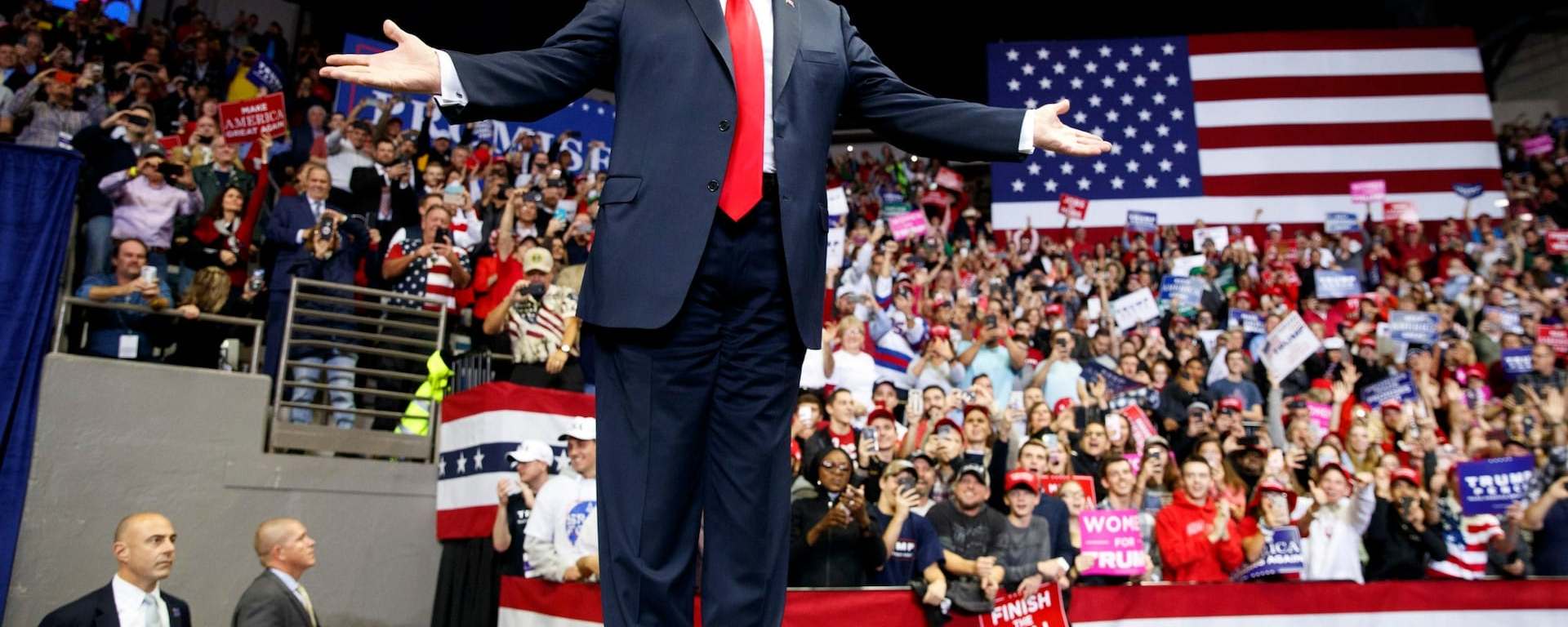
Today’s midterm elections will mark two years since Donald Trump’s shock election victory – the first test of how his Republican party is faring in the eyes of the American public.
The midterms is the name given to the combination of elections for the US Congress, governorships and other state-wide races that take place every two years.
Republicans currently control the House of Representatives and the Senate – the two chambers which make up the US Congress. But pundits have suggested the elections may see a so-called “blue wave” of Democrats sweeping into power.
A liberal base hoping to derail Mr Trump’s agenda has energised activists in key races, out-fundraising and out-polling a host of Republican incumbents.
Although Mr Trump is not on the ballot, in many ways the results will be seen as a referendum on his accomplishments and how voters feel about the US president.
How do the midterms work?
All 435 seats in the House of Representatives will be voted on in these elections. Representatives serve two-year terms so the entire house will face re-election in 2020.
Some 35 out of the Senate’s 100 seats will be on the ballot and 36 state governors are up for election. Senators hold six-year terms.
There are also a number of state-wide and local offices being elected on the same day.
Gubernatorial elections
Governors hold powerful positions since they control huge budgets and implement their state’s laws.
Republicans currently control 33 out of 50 governorships and two-thirds of 99 state legislature chambers.
Some 36 governorships are being elected this November and Democrats are targeting the 23 which have Republican incumbents up for re-election.
Key races to watch are in Ohio, Michigan, Florida and Pennsylvania – key swing states in the presidential elections. Governors in those states will be crucial to mobilising party activists and raising donations for the 2020 race.
 NewsStream